Tuesday, 23 February 2010

Weather or not


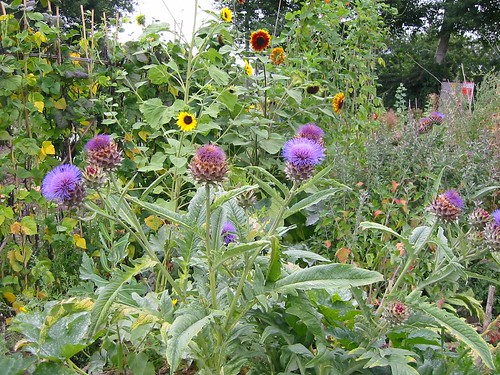
I'm having to dredge the archives to find pictures for each post, it's been so dull and cold and wintery for so long now there is nothing current that's attractive enough to share. Or maybe that's just me. Anyway, this is a shot taken on a trip to Siena ages ago showing lovely vegetable plots in a valley within the town.

In desperation I planted garlic in pots today. I've been waiting and waiting for a moment when the ground will thaw for long enough for me to get the cloves into the garden and the moment still hasn't come. I don't like having a lot of potted plants to tote around the place but there seems to be no alternative if we're to have reasonable sized bulbs this year.

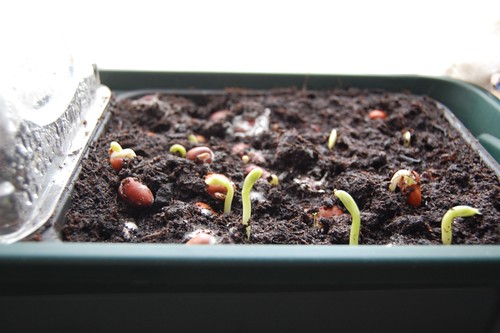
I'm also fretting about the Martock. In the end nearly all of the seeds, even the mouldy ones germinated so I have 25 little plants getting leggy and etiolated on the bedroom windowsill at the mercy of the cats because it's been too cold to put them in a greenhouse economically.

By now I would be expecting to keep the glass frost free with a minimal amount of heat overnight but as the outside temperatures are barely coming above zero even in the daytime it would be a bill too far. I've already lost nearly everything in there and I'm keeping my fingers crossed for what's left.

And I've no room to start anything else indoors, nursing as I am the peppers and aubergines on the bathroom windowsill.

I do wish this awful winter would end.

Friday, 19 February 2010

I never saw one the size of that before...

celeriac from the Farmers' Market
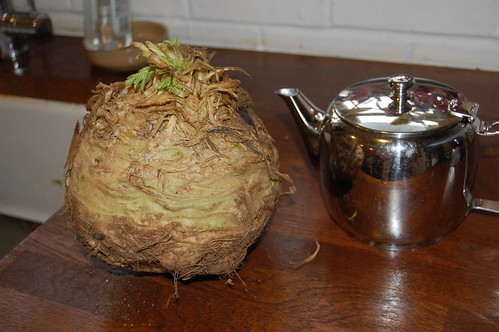
A celeriac with 4 person teapot for scale

Went down to the Farmers' Market in Newport Pagnell today and found this monster, along with her equally enormous siblings, for a mere £1.50. Celeriac is one of those vegetables that you seem to really need a knack for, I've never grown one half the size of this, although the tennis balls that have grown have been tasty it hardly seems worth the effort of keeping them weeded and cared for over a long season.

I told the stallholder but he seemed unimpressed by his work and said he often grew them like that. He didn't seem disposed to share his secret either.

So although I'm fairly sure I'm too late to start this year does anyone have any hints or tips that would help me grow better celeriac? I'd love to hear from you if you do.

NP Farmers Market

Monday, 15 February 2010

Spuddy

summer 03

Don't you just wish it was summer again?

Good old Alan Romans. I was about to complain about the non-arrival of my potato order and he mailed me this evening to say it's on its way. Well, when I say he mailed me, I don't really mean the man in person though who would know, but an official automated email was despatched to me along with the spuds.

This year, and I wasn't going to tell you until now in case there was a sudden flattering rush of imitations and my order couldn't be filled we're expecting;

Ambo -1kg, Arran Victory -1kg, British Queen -1kg, International Kidney -1kg, Mayan Queen -1kg, Pink Fir Apple -1kg and Stroma -1kg. Not as many as last year, we had such a good crop that I think a lot will be wasted so I'm going to try and match supply a little more closely to demand this year. Also I'm flirting with the idea of using a few of our own Sarpo Mira from last year. We really didn't have any blight and they are keeping well. We'd probably get away with it.

Nothing very unusual in the selection, the only novelty items are the Mayan Queens, described by Alan as a Solanum phureja hybrid, not long keeping but with good texture and flavour. The Phurejas are just one of several potato species that have been cultivated in the Andes for generations and have resistance to some forms of blight. They have not been widely available in Europe until breeders started to use them in programmes to improve blight resistance. It will be interesting to see how they do.

Now wasn't that exciting! What potatoes will you be planting this year?

Friday, 5 February 2010

Martock Beans

martock

Alleged to have been with us since the 12C, the Martock bean is a really just a primitive broad bean, a common field bean, used for human and stock food and as a soil improver and green manure.

The name comes from the village of Martock and they have an information page about it here which is worth a read. However, my usual cynicism has kicked in and I wonder whether the much transcribed and repeated history of these seeds can possibly relate to the current seed stocks. Nonetheless, I did take a packet from the HSL over 10 years ago now and grew them out on the allotment. Then I packed the beans up in envelopes and forgot about them.

This year, I was hoping to grow Egyptian ful. I haven't been able to source any named ful seed and remembering the marked similarity between the Martock and the dried ful available at the grocers' I hoped I would be able to get some fresh seed from the HSL again, but this year they are not offering them. So I went to my seed saving drawer, took out a packet of 10 year old seed and without much hope popped them into a tray of compost. The results are above! You can see a bit of mould where a few didn't make it but for seed that old and not particularly well stored it's a pretty good result.

So I'll be growing them this year, damping off permitting, and comparing them to the plants I also intend to grow from dried ful that I bought from the grocer. The seeds themselves are slightly smaller even than the ful, so there isn't any exact match. It should be interesting.

I have a concern that the saved seed were grown on the allotment and I made no particular precautions to keep the seed pure at that time but I'll see how it goes and rogue out anything that looks too aberrant. The same goes for the retail food crop ful - I've no idea what the provenance of that is although it's unlikely to be F1 and should be fairly pure as it will have been grown in field conditions.

Just as well we love our beans.

Tuesday, 26 January 2010

Jersey Beans

the jersey bean

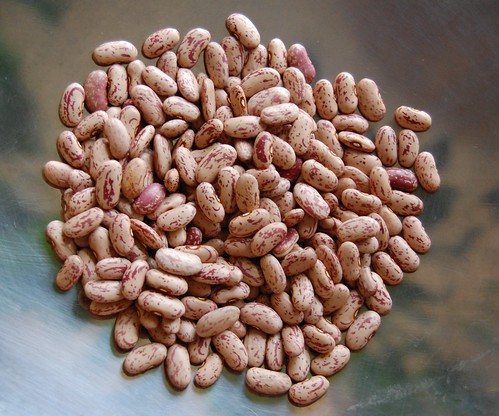
These beans came to me from the Heritage Seed Library last year and as I remember it they were described as the traditional bean of the Channel Islands. Unfortunately I can't find last year's seed list nor is the bean listed anywhere obvious on the HSL webpages so I can't confirm my memory is correct on this. Which is a problem since other researches on the web have turned up nothing about beans of this sort being traditional to Jersey, just that beans and Jersey have a long association - oh, and one of the commercial seed outlets is offering a bean called Jersey but it doesn't look like this one and is being sold for its round green pods, not its dried beans.

So, this rather rambling stream of misremembering and hearsay isn't terribly helpful to the seed saver with OCD (that's me, by the way) particularly since I've seen a bean listed called the Brittany bean that seems very similar (and equally untraceable) which could well be the same as Jersey is just a hack and spit over the waves from Brittany. The beans themselves resemble any number of 'pinto' bean selections and don't seem distinctive enough for easy identification.

All that aside the beans grew well for me last year, cropped reasonably heavily and now I've cooked some I can confirm they are mildly and pleasantly flavoured with a nice texture. Good beans by any name.

The plants are dwarf haricot type, don't need support unless the weather is very windy and are pretty much a sow and forget crop with flat pods which are very lightly shaded with purplish red markings. This rather scrappy picture seems to be the only record I took of the growing plants.

Now included in the seed swaps.

Monday, 25 January 2010

W...WW... WWoofers

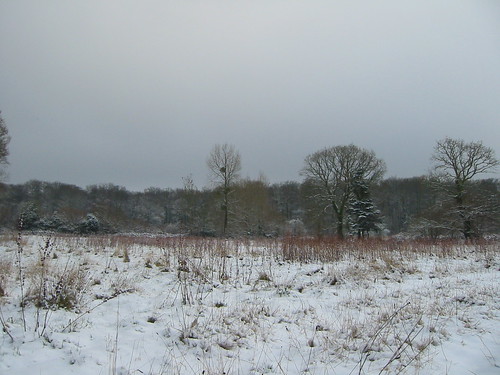
snowscape

One of the problems with managing more than 9 Hectares of land by ourselves is that two people simply can't do all the work that's required to keep the boundaries, ditches and fields in good order. In the past we've got around this by allowing local farmers to pasture animals and take hay passing on some of the work of land management to them as our reward, but it's a dangerous practice in France. If the loan becomes established the borrower may have more rights over the land than the owner and we don't want to find ourselves invaded by squatters. So far, everyone has been most gentlemanly but it really would be better to keep full control ourselves, if only we could.

Which brings us to the need for organising additional help. We've tried offering working holidays to friends and families without much success - my brother was a star last year but mostly when people holiday they want to do as a little as possible and so don't find the thought of hacking back brambles or digging ditches terribly enticing.

Enter the Wwoofers. They're a charitable initiative matching volunteers who want to learn about natural and sustainable organic techniques with farmers and small holders who can offer experience of that nature. No payment exchanges hands, volunteers live as family and receive board and lodging for their efforts.

I've known about them for sometime but I'm a bit hesitant about it. The fragmented nature of the individual country organisations makes our particular cross channel straddle difficult to place and, if I'm honest, I'm a bit doubtful about my ability to direct and organise worthwhile projects for the volunteers.

Has anyone tried this, either as a worker or host? I'd love to hear about your experiences and any advice you could offer.

Monday, 18 January 2010

Peas and Qs


Black Crowder and Red Ripper Cowpeas.

Vigna unguiculata, cowpeas, southern peas, crowders are legumes originating in central Africa which were transplanted to America and the Caribbean along with the slave trade and are now well established as favourite traditional crops. They are also grown across India (some sources suggest they originated there) and anywhere where difficult conditions require a robust economical protein source for man and animal. A drought tolerant crop, they need little fertiliser and are fairly resistant to pests in good conditions although in Africa the harvest is subject to severe insect attacks which rob the farmers of a lot of their work. The plants need warmth and so have not been grown much in northern countries where the cold and wet are enough to prevent vigour and flowers. As a result they are not as popular as French (Phaseolus vulgaris) and runner (Phaseolus coccineus) beans

There are several subspecies within the genus. The yard long bean, Vigna unguiculata subsp. sesquipedalis, is sometimes attempted in greenhouses in Europe for its green pods which are popular in oriental cooking but this needs very good weather to succeed in most summers.

The black eyed bean, known mostly to Europeans from its association with Caribbean peas and rice is another subspecies, Vigna unguiculata subsp. unguiculata. I don't know of anyone growing these in the UK or France so if you are, please comment and let me know how it goes.

I've decided to try a couple of types of this bean this year. It was not that easy to find seed so I've chosen open pollinated heritage varieties from the southern states of the USA where there seems to be more diversity than what's available to me from other parts of the world. Both types are claimed to mature in 70 days although I suspect it may take a little longer than that over here unless the hot weather is exceptional. Whatever, I'm hoping that 3 months of summer should be sufficient.

Red Ripper is a variety that is apparently popular in Texas so it should be good! It's a climbing vine with crimson scarlet pods and red beans. The pictures look dramatic and I'm hoping to get a crop of beans which can be eaten green or dried.

The other variety I've chosen is Black Crowder. This is a bush bean, unsurprisingly with black beans tightly packed into long green pods held above the foliage.

Like all beans I've ever grown it seems that they may grow short or climb at will if soil fertility or growing conditions set them off but I'm hoping that they will stay true to type so that I can properly assess them as permanent members of my core vegetable varieties.

Varieties will cross unless isolated at about 150m so I won't be saving seed from these this year, just trying hard to get them to grow but if they do well it might be worth starting a selection programme to choose cultivars that do well in Normandy conditions.

To learn more about cowpeas look at the Lost Crops of Africa or this article by the Thomas Jefferson Institute.

p.s. Apologies for the poor photo, all my cameras are out of charge.